
Variational PDE models and algorithms for image processing
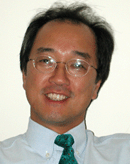
Speaker: Tony F. Chan, Dean of Physical Sciences and Professor of Mathematics, UCLA___BR_PLACEHOLDER___Date and time: Friday, January 23, 2004, 4:00–4:55 p.m.___BR_PLACEHOLDER___Location: Little Hall, Room 109___BR_PLACEHOLDER___Opening remarks: Krishnaswami Alladi, Chair, Department of Mathematics___BR_PLACEHOLDER___Refreshments: After the lecture, Little Hall, Room 339 (the Atrium)
Abstract
Image processing is an area with many important applications, as well as challenging problems for mathematicians. The integration of math and computers is allowing great strides in this area, which has applications ranging from the restoration of old photos to developing complex geometric models for object detection and recognition.
On the mathematical side, Fourier/wavelet analysis and stochastic/statistical/Bayesian methods have had major impact in this area. Starting more recently, there has been increased interest in a new and complementary approach, using partial differential equations (PDEs) and differential-geometric models. It offers a more systematic treatment of geometric features of images, such as shapes, contours and curvatures, etc., as well as allowing the wealth of techniques developed for PDEs and Computational Fluid Dynamics (CFD) to be brought to bear on image processing tasks. I’ll use examples from my recent work to illustrate this synergy, including total variation restoration and inpainting, and variational level set segmentation.
About the speaker
Professor Tony Chan has made many interdisciplinary contributions to applied mathematics and scientific computing. He is well known for spreading the message and mission of mathematics to the public at large. He serves on the editorial boards of applied mathematics journals and is involved in various mathematical and scientific organizations. He has a PhD in Computer Science from Stanford and was a professor of Computer Science at Yale. He is currently Professor of Mathematics and Dean of the Division of Physical Science within the College of Letters and Science at the University of California, Los Angeles.
Related program
This years Ulam Colloquium is part of the Mathematical Methods in Imaging and Vision Workshop and the Special Year in Applied Math.